Reliable hot water is the backbone of many industrial operations, from textile dyeing to food processing. An oil and gas fired hot water generator delivers it at scale, with steady temperature and strong fuel efficiency. At Rapid Cool, we have built heating equipment for decades, and this guide explains how these systems work, what makes them valuable, and how to choose the right one for your plant.
What Is an Oil & Gas Fired Hot Water Generator?
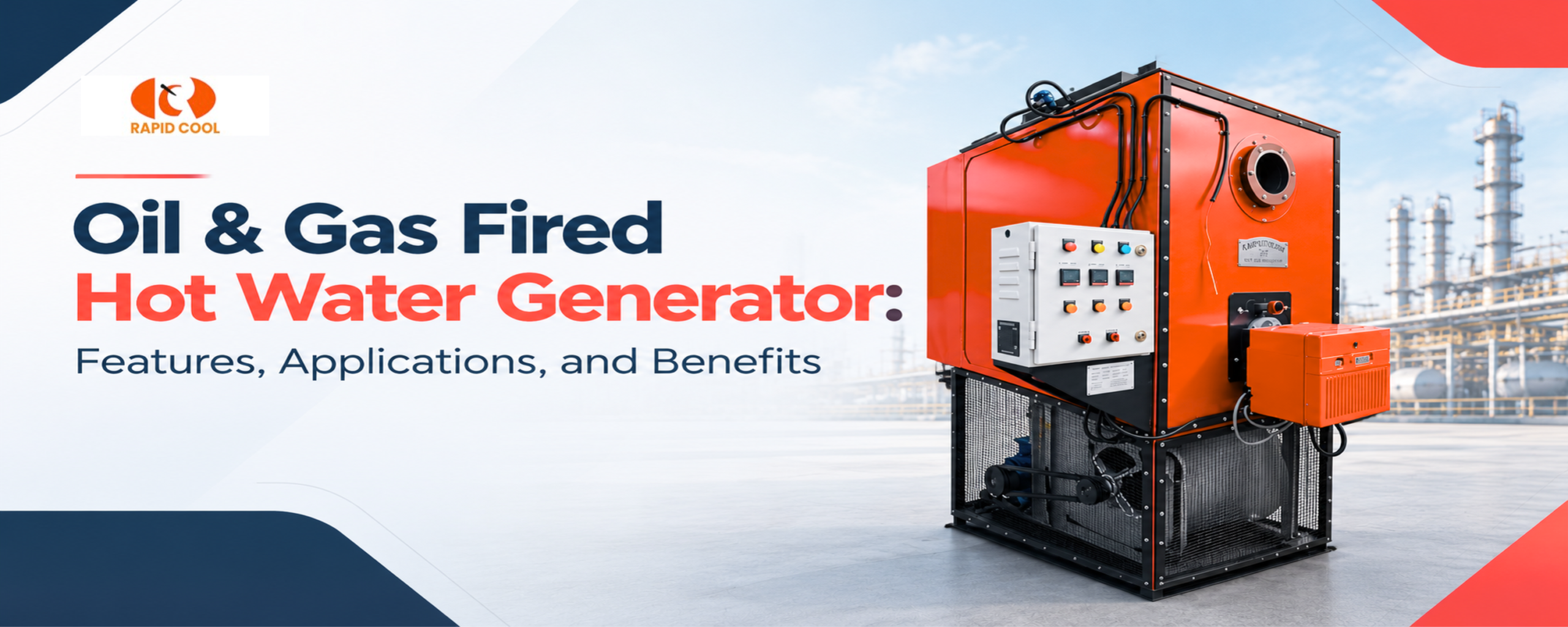
An oil and gas fired hot water generator is a closed-loop heating system that burns liquid or gaseous fuel to heat water for industrial use. Depending on the burner, it can run on diesel, light oil, natural gas, LPG, or a combination.
An oil fired hot water generator suits sites where gas supply is limited or unreliable. A gas fired hot water generator offers cleaner combustion and lower maintenance where piped gas is available. Dual-fuel models combine both, letting operators switch based on cost and availability.
Unlike a boiler that produces steam, a hot water generator supplies pressurized hot water for processes that need steady, controllable heat. That makes it a simpler, safer, and often more economical choice for the modern industrial hot water generator market.
How Does an Oil & Gas Fired Hot Water Generator Work?
The working principle is straightforward:
- Fuel ignition: The burner mixes fuel with air and ignites it in the combustion chamber.
- Heat transfer: Hot flue gases pass through heat exchanger tubes, transferring energy to the circulating water.
- Water circulation: A pump carries the heated water to process tanks, heat exchangers, or radiators.
- Return and reheating: After giving up its heat, the water returns to the generator and the cycle repeats.
- Exhaust: Cooled flue gases exit through the chimney, often after passing through a heat recovery section.
An expansion tank maintains system pressure, while sensors and controllers adjust burner output to hold the set temperature.
Key Features of an Oil & Gas Fired Hot Water Generator
Quality units are built for performance and long service life. Core features include:
- Dual-fuel capability: Switch between oil and gas to manage costs and avoid supply disruptions.
- High thermal efficiency: Optimized combustion and heat recovery reduce fuel consumption.
- Compact design: A smaller footprint than a comparable steam boiler saves floor space.
- Automatic controls: PLC-based systems manage ignition, temperature, and safety interlocks.
- Low-pressure operation: Lower pressure than steam reduces operating risk.
- Robust construction: Quality steel and corrosion-resistant components extend life.
- Safety systems: Flame failure protection, over-temperature cutoffs, and relief valves protect people and equipment.
For plants that need a ready-to-install package, our Skid Mounted Hot Water Generator arrives pre-assembled, which shortens installation time and site work.
Benefits of Using an Oil & Gas Fired Hot Water Generator
Lower fuel costs. Efficient combustion and dual-fuel flexibility mean you burn less fuel per unit of heat and can choose the cheaper source.
Precise temperature control. Stable water temperature improves product consistency in dyeing, chemical processing, and food production.
Reduced maintenance. With no steam traps or condensate lines, upkeep is simpler and cheaper.
Improved safety. Low-pressure operation lowers the risk of high-pressure failures.
Faster heat-up. Quick response to load changes keeps production on schedule.
Cleaner operation. Modern burners support compliance with emission norms.
Industrial Applications of Oil & Gas Fired Hot Water Generators
An industrial hot water generator serves many sectors:
- Textile and dyeing: Dye baths, washing, and finishing need uniform temperatures.
- Food and beverage: Pasteurization, cooking, and sanitizing depend on steady hot water.
- Chemical and pharmaceutical: Reactor jackets and process vessels need accurate thermal control.
- Plastics and rubber: Mold heating and vulcanization rely on consistent heat.
- Paper and packaging: Drying and laminating use hot water for even heating.
- Hotels, hospitals, and laundries: Centralized hot water and space heating run on large generators.
- Oil and gas sector: Tank heating and pipeline heat tracing keep fluids flowing in cold conditions.
Applications that need higher process temperatures can also consider our Thermic Fluid Hot Water Generator.
How to Choose the Right Oil & Gas Fired Hot Water Generator for Your Industry
Selecting the right system means matching the equipment to your process. Consider these factors:
- Heat load: Calculate total thermal demand in kW or kcal/hr and add a margin for future growth.
- Temperature and pressure: Confirm the maximum water temperature your process needs.
- Fuel availability and cost: If both oil and gas are accessible, a dual-fuel model gives the best flexibility.
- Efficiency: Compare fuel consumption across models, since higher efficiency means faster payback.
- Space and installation: Check floor area, chimney placement, and utility connections.
- Compliance: Make sure the unit meets local emission and safety standards.
- Choosing the right manufacturer: Work with an oil and gas fired hot water generator manufacturer that offers customization, testing, installation, and after-sales service.
Rapid Cool has manufactured heating equipment for over four decades, with hot water generators available from 15 kW to 2000 kW. You can learn more about our company and explore the full RAPIDTHERM range.
Conclusion
An oil and gas fired hot water generator offers efficient, safe, and flexible heating for modern industry. Whether you need an oil fired hot water generator, a gas fired hot water generator, or a dual-fuel system, the right specification lowers operating costs and keeps production reliable. As a trusted oil and gas fired hot water generator manufacturer, Rapid Cool delivers customized solutions backed by engineering expertise. Browse all our products or contact our team today for a tailored recommendation.
Frequently Asked Questions (FAQs)
1. What is an oil and gas fired hot water generator?
It is a closed-loop heating system that burns oil, gas, or both to produce pressurized hot water for industrial processes. Dual-fuel burners let operators switch between fuels based on cost and availability.
2. What is the difference between an oil fired hot water generator and a gas fired hot water generator?
An oil fired hot water generator runs on diesel or light oil, which suits sites with no piped gas. A gas fired hot water generator uses natural gas or LPG and typically burns cleaner with less maintenance. A dual-fuel model gives you both options in one unit.
3. How is a hot water generator different from a steam boiler?
A steam boiler produces high-pressure steam, while a hot water generator supplies pressurized hot water at lower operating pressure. This makes it simpler to run and easier to maintain, and it suits processes that need steady, controllable heat.
4. Which industries use an industrial hot water generator?
Common users include textile and dyeing, food and beverage, chemical and pharmaceutical, plastics and rubber, paper and packaging, hotels, hospitals, laundries, and the oil and gas sector.
5. What capacity range is available?
At Rapid Cool, our hot water generators are available from 15 kW to 2000 kW. Custom designs are possible to match your process requirements.