A single piece of weld slag or a stray gasket fragment can ruin a pump seal in minutes. Plenty of plant managers learn this the expensive way, after a shutdown that a simple strainer would have prevented. If you have ever wondered how pipelines stay clean without stopping flow, the answer is often a sturdy steel vessel bolted into the line.
At Rapid Cool, we work as a trusted Pot Type Strainer Manufacturer in India, and customers ask us about these devices every week. This post explains what they are, how they work, where they fit, and how to keep them running well.
What Is a Pot Type Strainer?
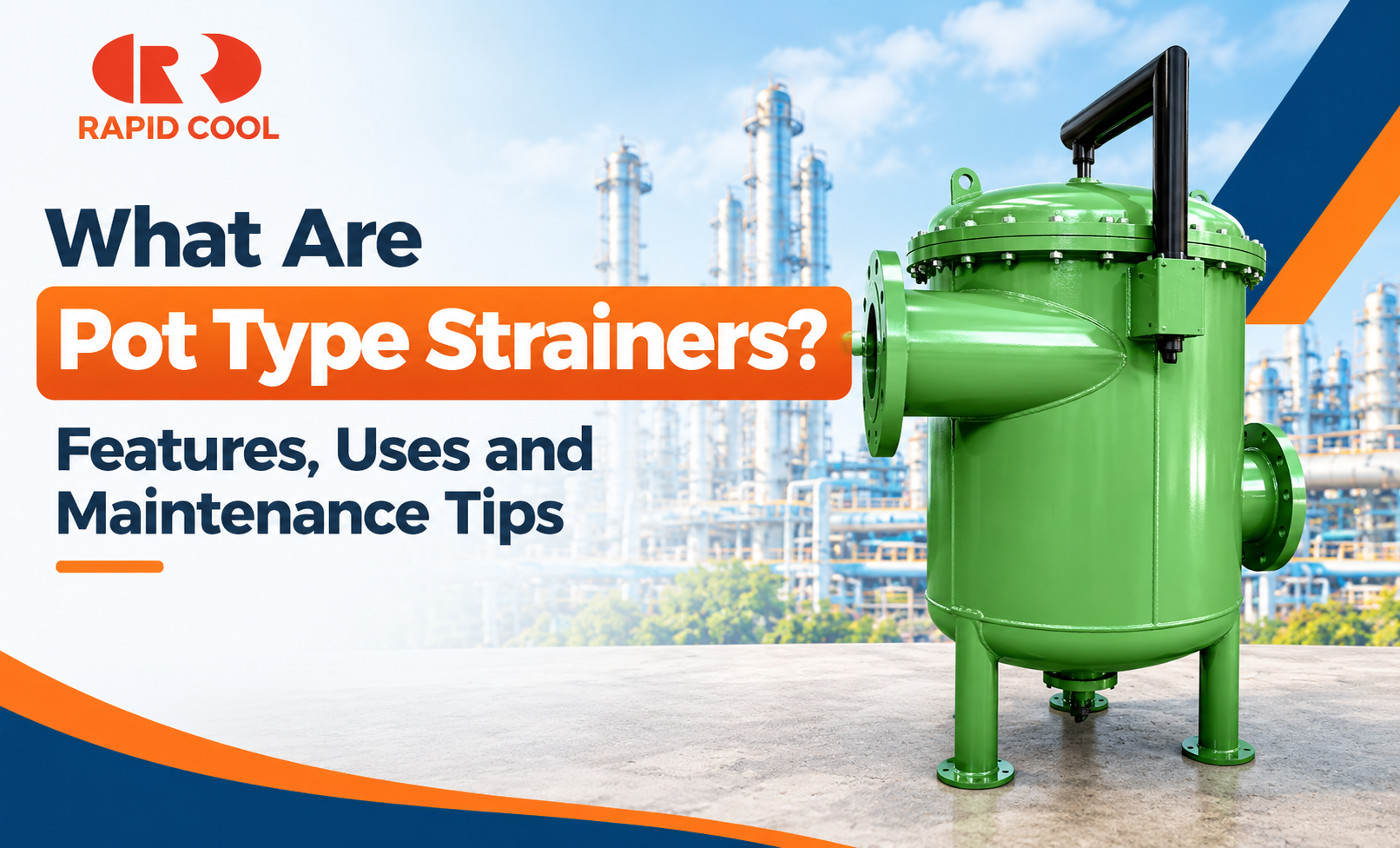
A pot type strainer is an industrial filtering device installed in a pipeline to catch solid particles before they reach pumps, valves, heat exchangers, or meters. It gets its name from its shape: a cylindrical, pot-like body that holds a removable basket or screen. Fluid enters, passes through the perforated or mesh basket, and leaves clean. Debris stays in the basket until someone removes it.
Some buyers search for a pot type filter instead of a strainer. In most plants, the two terms describe the same equipment, and a good Pot Type Filter Manufacturer will build either to the same specification.
How It Works
Fluid flows in through the inlet and into the pot, then moves through the basket from the inside out. The basket traps particles larger than its openings, and the filtered fluid exits through the outlet.
As debris builds up, the pressure drop across the strainer rises. Once a differential gauge reaches your set limit, the basket needs cleaning. Most units include a drain plug and a vent so operators can depressurize and empty the vessel before opening it.
Key Features
- Large straining area: More surface means longer intervals between cleanings and less flow restriction.
- Removable basket: The basket lifts out for cleaning or replacement without removing the body from the line.
- Quick-opening cover: Swing bolts or a hinged lid cut the time needed for service.
- Material choices: Carbon steel, stainless steel (304 or 316), cast iron, and special alloys handle different fluids and temperatures.
- Custom screen sizes: Perforation and mesh sizes can be matched to the particle size you need to catch.
- Pressure taps: Connection points for gauges let you track clogging in real time.
Common Uses
An industrial pot type strainer protects equipment across many sectors. In cooling water and HVAC systems, it keeps scale and sediment away from chillers and pumps. Chemical and petrochemical plants use it to guard process lines. Food and beverage facilities rely on stainless steel versions to protect fillers and mixers from foreign particles.
You will also find them in power stations, marine systems, fuel handling, and wastewater treatment. In each case, the job is the same: stop solids early so the expensive equipment downstream lasts longer.
Pot Type vs. Y and Basket Strainers
Y strainers are compact and inexpensive, and they work well for small lines with light debris loads. They have a small screen area, though, and clog faster. Simplex basket strainers are similar to pot types but are often built for lower pressures. A pot type strainer is the better choice when you have high flow rates, heavy debris, or a need for fewer shutdowns. Duplex versions, which pair two baskets with a switching valve, let you clean one side while the other keeps the line running.
Maintenance Tips
A strainer is only useful if it is cleaned on time. These habits keep yours working:
- Watch the pressure differential. A steady climb in the gauge reading means the basket is filling up. Sudden drops can mean a torn or damaged screen.
- Set a cleaning schedule. Start with a fixed interval, then adjust based on what you find inside each time.
- Isolate and depressurize first. Close the valves, open the vent, and drain the pot before loosening the cover. Never open a strainer that is still under pressure.
- Inspect the basket. Look for dents, torn mesh, and corrosion. A damaged basket lets debris slip through.
- Check the gasket and bolts. Replace worn gaskets and tighten cover bolts evenly to prevent leaks.
- Keep a spare basket on hand. Swapping in a clean one takes minutes and shortens downtime.
- Record what you find. Notes on debris type and volume can point to upstream problems, such as pipe corrosion.
Choosing the Right Supplier
Not every strainer suits every system. Pressure rating, connection type, screen size, and material all depend on your fluid and operating conditions. A reliable Pot Type Strainer Supplier will ask about these details and build to your specification rather than sell you something off the shelf.
Look for clear documentation, pressure testing, and support after delivery. Working with a Pot Type Strainer Manufacturer in India also means shorter lead times and easier access to spares and service.
Final Thoughts
Pot type strainers are simple devices that do an important job: keeping solids out of the equipment that costs the most to repair. A well-chosen unit with regular maintenance saves money, reduces downtime, and protects your process.
If you are planning a new system or replacing an aging strainer, talk to a dependable Pot Type Strainer Manufacturer. Rapid Cool also works as a Pot Type Filter Manufacturer, building units to match your flow, pressure, and material requirements. Contact our team to discuss your project.
Frequently Asked Questions
1. What is the difference between a pot type strainer and a Y strainer?
A pot type strainer has a larger body and basket, so it holds more debris and lets more fluid through with less resistance. A Y strainer is smaller and suits low-flow lines with light contamination.
2. How often should a pot type strainer be cleaned?
There is no fixed answer. It depends on how dirty the fluid is. Track the pressure differential, and clean the basket when the reading reaches the limit set for your system. New installations often need more frequent checks in the first few weeks, since construction debris tends to collect early.
3. Which materials are available?
Carbon steel, stainless steel (304 and 316), cast iron, and special alloys are all common. Pick the material based on the fluid, temperature, and pressure in your line.
4. Can a pot type strainer be customised?
Yes. Size, end connections, basket mesh, pressure rating, and cover type can all be built to your requirements. Share your line size, fluid, and operating conditions with the manufacturer so the unit fits your system.
5. Are pot type strainers and pot type filters the same thing?
In most industrial settings, yes. Both terms refer to a vessel with a removable basket that catches solids in a pipeline. A Pot Type Filter Manufacturer will usually supply the same product under either name.