Hot water is one of those things we only think about when it stops working, until a cold shower on a winter morning reminds us how essential it really is. Behind that steady stream of warm water is often an electric hot water generator, a compact and efficient system that has quietly become the backbone of hot water supply in homes, hotels, hospitals, and factories alike.
In this guide, we’ll break down how these systems work, where they’re used, and the quality benchmarks and industry standards that separate a reliable unit from a risky one.
The Basic Working Principle
At its core, an electric hot water generator works on a simple principle: electrical resistance heating. Cold water enters the unit and passes over or around a heating element, typically made of a corrosion-resistant alloy like Incoloy or stainless steel. When electricity flows through this element, resistance causes it to heat up, and that heat transfers directly to the water flowing past it.
Depending on the design, this happens in one of two ways:
Storage-type generators heat a tank of water and maintain a set temperature using a thermostat, cycling the heating element on and off so hot water is always ready to draw. This is essentially how an electric hot water boiler operates, storing a reserve of heated water for immediate use.
Instantaneous (tankless) generators heat water only as it flows through the unit, with no storage tank involved. Sensors detect flow and adjust heating output in real time, delivering hot water almost instantly while using energy only when there’s actual demand.
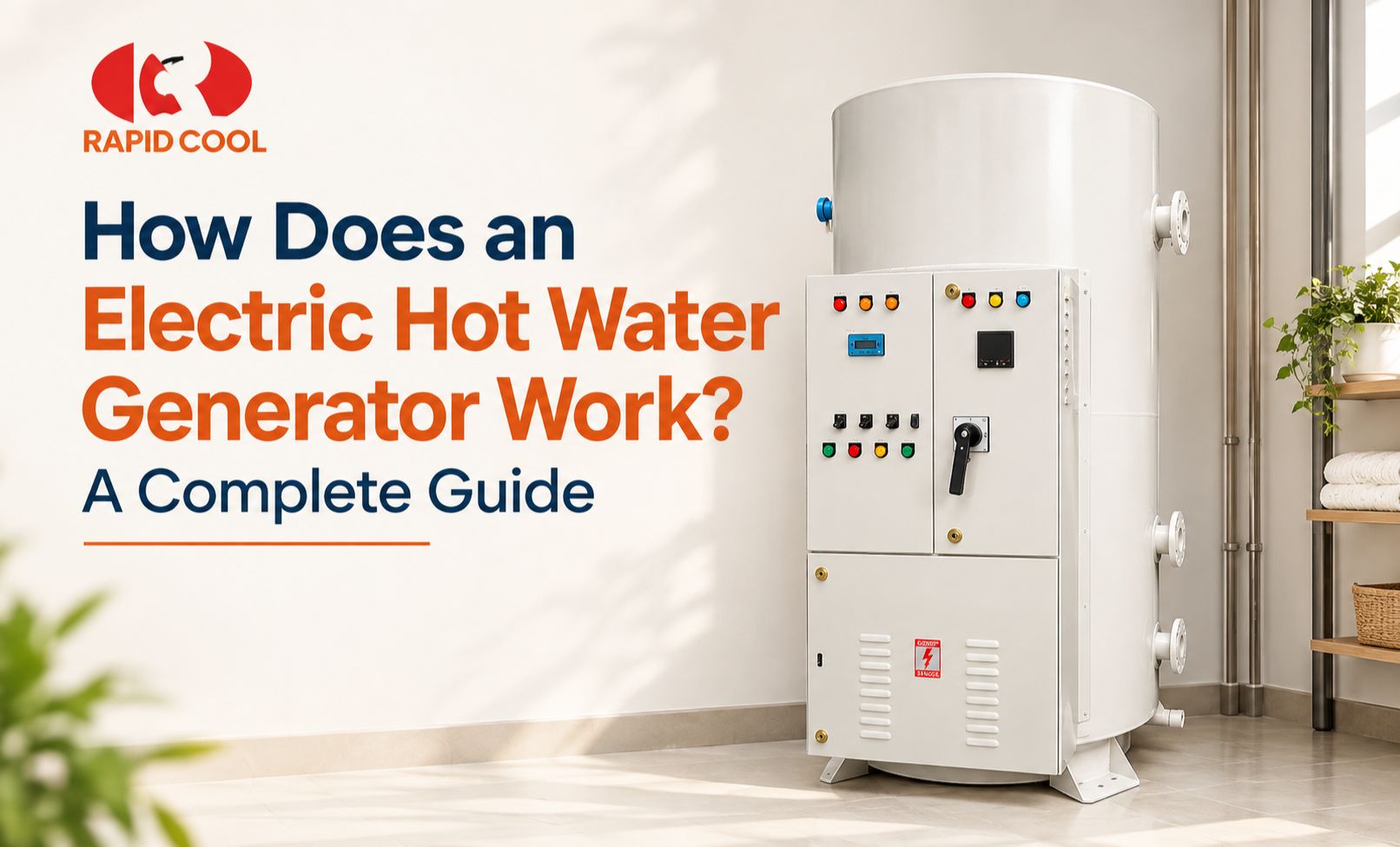
Most commercial-grade systems also include a control panel with digital temperature regulation, pressure relief valves, and safety cutoffs that shut the unit down if temperatures or pressures exceed safe limits, allowing consistent performance without constant manual oversight.
Why Quality Matters More Than You’d Think
Not all electric hot water generators are built the same, and the quality difference shows up fast in energy bills, in downtime, and in safety. A well-engineered unit uses higher-grade heating elements that resist scale buildup and corrosion, insulation that minimizes standby heat loss, and control systems that respond accurately to demand.
Lower-quality units often suffer from uneven heating, premature element failure, and poor insulation, forcing the system to work harder to maintain the same output. This is especially true for an industrial electric hot water generator, where continuous, high-volume operation puts far more stress on components than a typical residential setup. In settings where demand can spike suddenly across dozens of outlets or process lines, a poorly built generator quickly becomes a liability rather than a dependable utility, which is why sourcing from an established electric hot water boiler manufacturer with a track record of rigorous testing matters just as much as the technology itself.
Applications Across Industries
Electric hot water generators vary significantly in design depending on where and how they’re used:
- Residential settings rely on smaller-capacity units that prioritize efficiency and compact footprint.
- Hotels and hospitality need high-recovery systems that handle simultaneous demand from dozens of rooms without a drop in pressure or temperature.
- Hospitals and healthcare facilities require precise, stable temperature control for sterilization and hygiene, with built-in redundancy.
- Food and beverage processing depends on hot water for cleaning and sanitation, where consistency directly affects product safety.
- Industrial and manufacturing facilities often integrate an industrial hot water generator into larger process lines to power sanitation cycles and temperature-sensitive production steps.
Choosing the right capacity, recovery rate, and control system for a specific application is just as important as the underlying technology.
Industry Standards and Certifications
Given how central hot water systems are to safety and hygiene, they’re subject to standards that vary by region and application, including ASME certification for pressure vessel safety, UL listings for electrical compliance, and energy efficiency ratings measuring standby loss and recovery efficiency.
Commercial and industrial units often face additional requirements covering heating element material grades, insulation performance, and electrical load management, while healthcare and food-processing facilities frequently need to meet sector-specific hygiene standards as well.
When evaluating an electric hot water generator, check not just the efficiency numbers but the certifications behind the build. Working with an established hot water generator manufacturer in India simplifies this, since reputable manufacturers design around these standards from the outset rather than retrofitting compliance later.
About Rapid Cool
Rapid Cool has been manufacturing electric hot water generators and electric steam generators (pan-type humidifiers) for industrial and domestic use under the brand name “RC” for over 49 years. What began as a vision to bring advanced boiler and air-conditioning technology to India has grown into an established industry name for hot water generators, air-conditioning plants, and humidifiers alike.
The product range today spans Gas-cum-Electric and Gas/Oil-based hot water generators, ultrasonic humidifiers, and mild steel or stainless steel tanks, with hot water generators available from 15KW to 2000KW. Manufacturing takes place at a well-equipped factory with in-house testing, ensuring every unit meets Indian and international standards, with Rapid Cool’s R&D facility handling custom specifications.
The company serves industrial customers across Delhi, Rajasthan, Maharashtra, Haryana, Punjab, Himachal Pradesh, and Jammu & Kashmir, with an expanding footprint in Nepal, Mauritius, and Australia.
Conclusion
An electric hot water generator might seem like a simple appliance, but the engineering behind it resistance heating elements, smart controls, and safety systems is what makes reliable hot water possible across homes, hospitals, hotels, and industrial facilities. Quality and adherence to industry standards determine whether a system performs safely for years or becomes a recurring headache.
Whether you’re upgrading a home system or specifying equipment for a large facility, understanding how an electric hot water generator works puts you in a much better position to choose the right one, and with nearly five decades of manufacturing experience, Rapid Cool is built to help you choose with confidence.
Frequently Asked Questions
1. What is an electric hot water generator used for?
It’s used to heat water on demand or store heated water for use in homes, hotels, hospitals, food processing units, and industrial facilities — anywhere consistent hot water is needed for cleaning, sanitation, comfort, or process operations.
2. How is an electric hot water generator different from a regular water heater?
While the basic heating principle is similar, hot water generators are typically built for higher capacity, continuous operation, and industrial-grade durability. Standard water heaters are usually designed for lighter, residential-scale use.
3. Is an electric hot water generator more efficient than a gas-based one?
Electric units are generally cleaner, quieter, and easier to maintain since there’s no combustion involved. Gas-based systems can sometimes be more cost-effective for very high-capacity industrial use, depending on local energy prices. The right choice depends on the application, available infrastructure, and operating costs.
4. What safety features should a good electric hot water generator have?
Look for pressure relief valves, automatic thermostat cutoffs, flow switches, and overheat protection. Units built to ASME or UL standards typically include these as standard safety measures.
5. How do I choose the right capacity for my facility?
Capacity depends on peak hot water demand, number of outlets, and recovery time needed. An industrial hot water generator manufacturer can help calculate the right KW rating based on your facility’s flow rate and usage pattern.