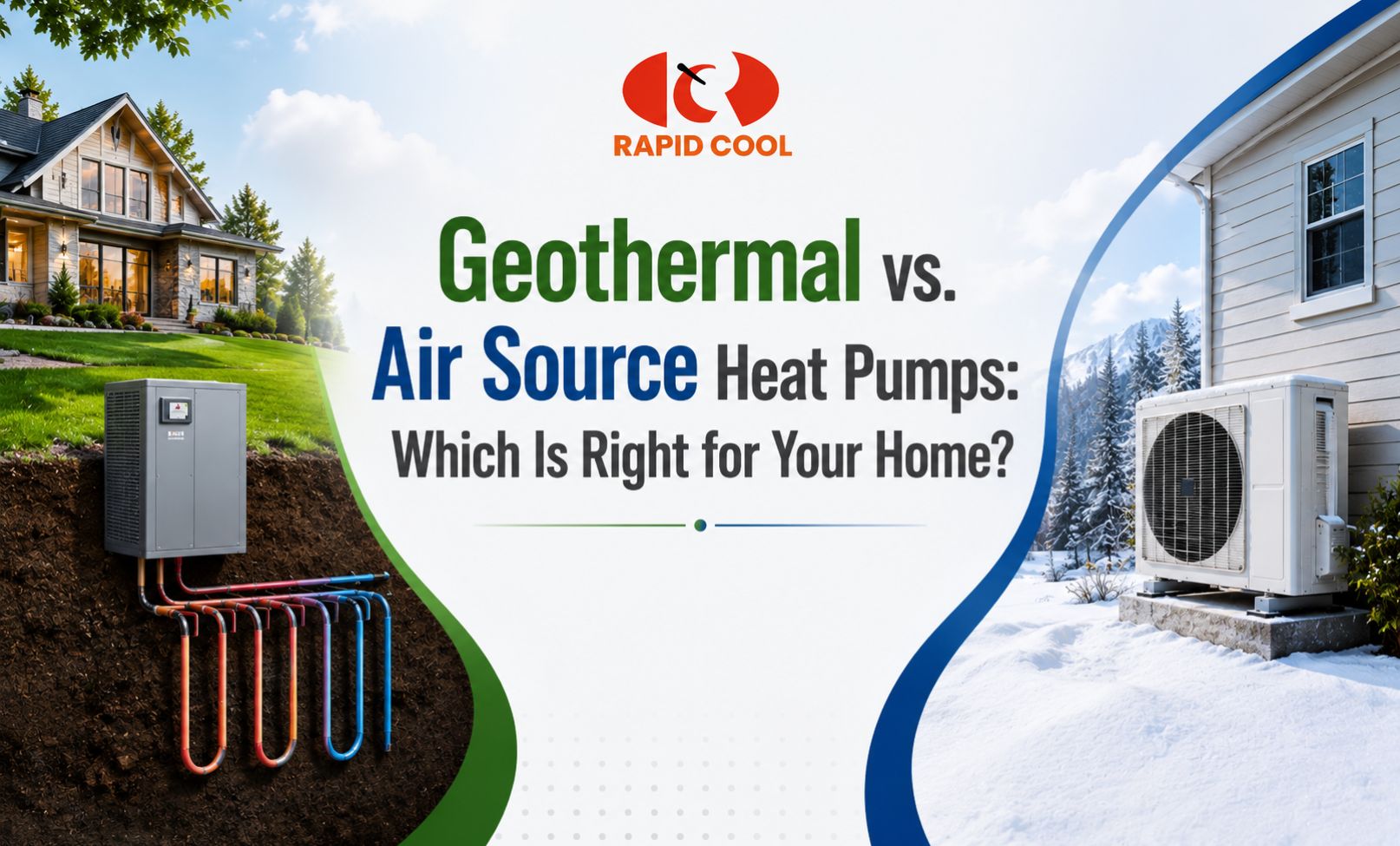
Geothermal vs. Air Source Heat Pumps: Which Is Right for Your Home?
If you’re upgrading your home or facility’s heating and cooling system, you’ve likely come across two popular options: geothermal heat pumps and air source heat pumps. Both improve energy efficiency, but they work differently and suit different properties. At Rapid Cool, a trusted geothermal heat pump manufacturer with nearly five decades of HVAC manufacturing experience, we help customers understand these systems so they can choose the right one for their needs.
How Air Source Heat Pumps Work
Air source heat pumps pull heat from outdoor air to warm a space in winter, then reverse the process to cool it in summer. Installation is quick and affordable, usually completed in a day or two, since there’s no digging involved.
The downside is efficiency loss in cold weather. As outdoor temperatures drop, these systems work harder and may need a backup heat source, which can raise energy costs during harsh winters.
How Geothermal Heat Pumps Work
Geothermal systems tap into the earth’s stable underground temperature, typically 50°F to 60°F year-round, instead of relying on outdoor air. A buried loop system circulates fluid that absorbs or releases heat as needed, giving consistent performance regardless of the season.
Because ground temperatures don’t fluctuate like air temperatures, geothermal systems avoid the efficiency drop air source units experience in winter. The trade-off is a higher upfront cost, since installing the loop requires excavation or drilling. You can explore the specifications of our Geothermal Heat Pump range to see how these systems are engineered for long-term reliability.
Efficiency and Long-Term Savings
Geothermal systems typically achieve a coefficient of performance (COP) of 3 to 5, meaning they produce three to five units of heat for every unit of electricity used. Air source heat pumps are efficient too, but usually fall lower on that scale, especially in cold conditions.
Over a 20-to-25-year lifespan, geothermal systems often pay back their higher installation cost within 5 to 10 years through lower energy bills. Air source systems offer a faster initial payback but can cost more to run in extreme climates.
Lifespan and Maintenance
Geothermal loops can last 50+ years, and indoor components typically run 20 to 25 years — nearly double the average lifespan of air source units (15 to 20 years). Since the loop is underground and shielded from weather, geothermal systems generally need less maintenance than air source units, which are exposed to rain, snow, and temperature swings.
Which One Fits Your Property?
- Climate: Harsh winters favor geothermal’s steady performance.
- Budget: Air source systems cost less upfront.
- Property size: Geothermal needs space for the loop (vertical loops work for smaller sites).
- Long-term plans: Staying long-term favors geothermal’s lifetime savings.
Working with an experienced geothermal heat pump manufacturer makes this decision easier, since they can assess your site and application to recommend the best-fit system, whether residential, commercial, or industrial.
Why Homeowners and Businesses Choose Rapid Cool
For over 49 years, Rapid Cool has been manufacturing HVAC, heating, and humidification solutions under the “RC” brand, serving customers across India as well as in Nepal, Mauritius, and Australia. Alongside our geothermal and other heat pump ranges, we also design hot water generators, steam generators, and humidifiers for industrial and domestic use.
With four manufacturing units and an in-house R&D facility, we build systems that meet Indian and international quality standards while adapting to specific customer requirements, helping you choose the right loop configuration and system size before you invest.
Conclusion
Both systems offer real energy savings over conventional HVAC, but they serve different priorities. Air source heat pumps suit those who want affordability and fast installation, while geothermal systems deliver superior long-term efficiency and durability. As an experienced geothermal heat pump manufacturer with nearly five decades in the HVAC industry, Rapid Cool is ready to help you find the right system for your home or business. Contact our team today for a personalized assessment.
Frequently Asked Questions
- Is a geothermal heat pump worth the extra upfront cost? For properties in use for 7+ years, yes — lower energy bills often offset the cost within 5 to 10 years.
- Can geothermal be installed on a smaller site? Yes. Vertical loop systems need less surface space than horizontal ones, since they go deeper rather than wider.
- Do air source heat pumps work in cold climates? They can, but efficiency drops in extreme cold and a backup heat source is often needed.
- How long does installation take? Air source: 1–2 days. Geothermal: 1–2 weeks, due to loop excavation or drilling.
- Are there incentives available for geothermal systems? Some regions offer rebates or credits for high-efficiency systems. Availability varies, so it’s worth checking current local programs.